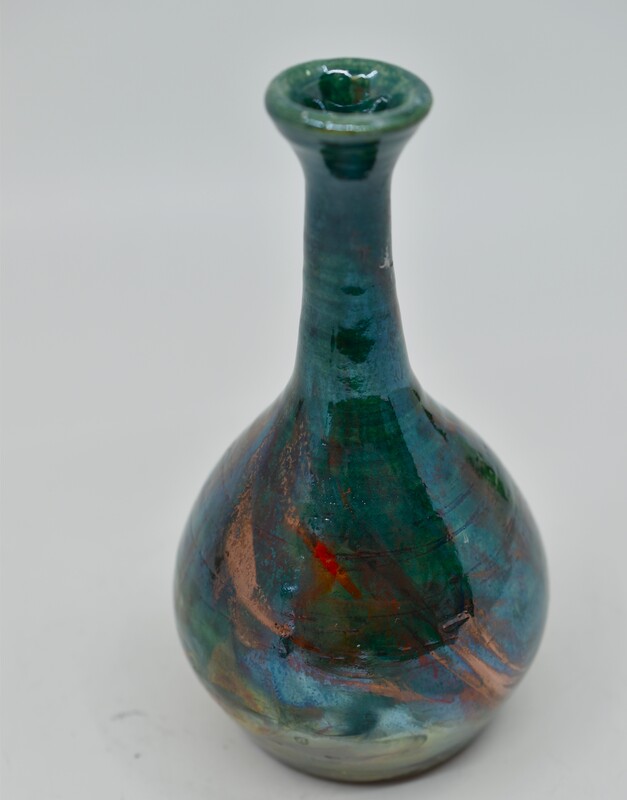
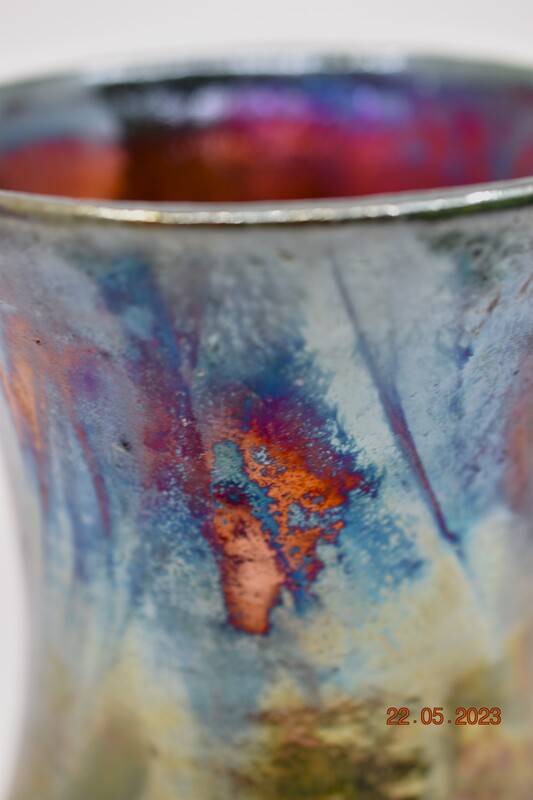
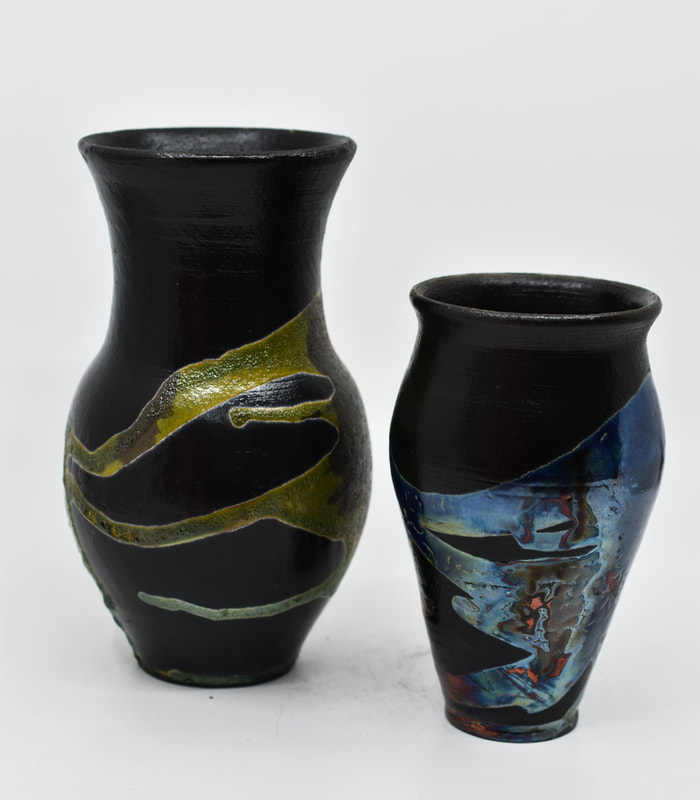
Western Raku Pottery is made from a low fire process inspired from the traditional Japanese Raku. It involves removing the pottery from kiln at approximately 1800 degrees Fahrenheit. The pots are placed in a combustion chamber where combustible items ignite. While the pottery is in the combustion chamber the fire works it's magic.
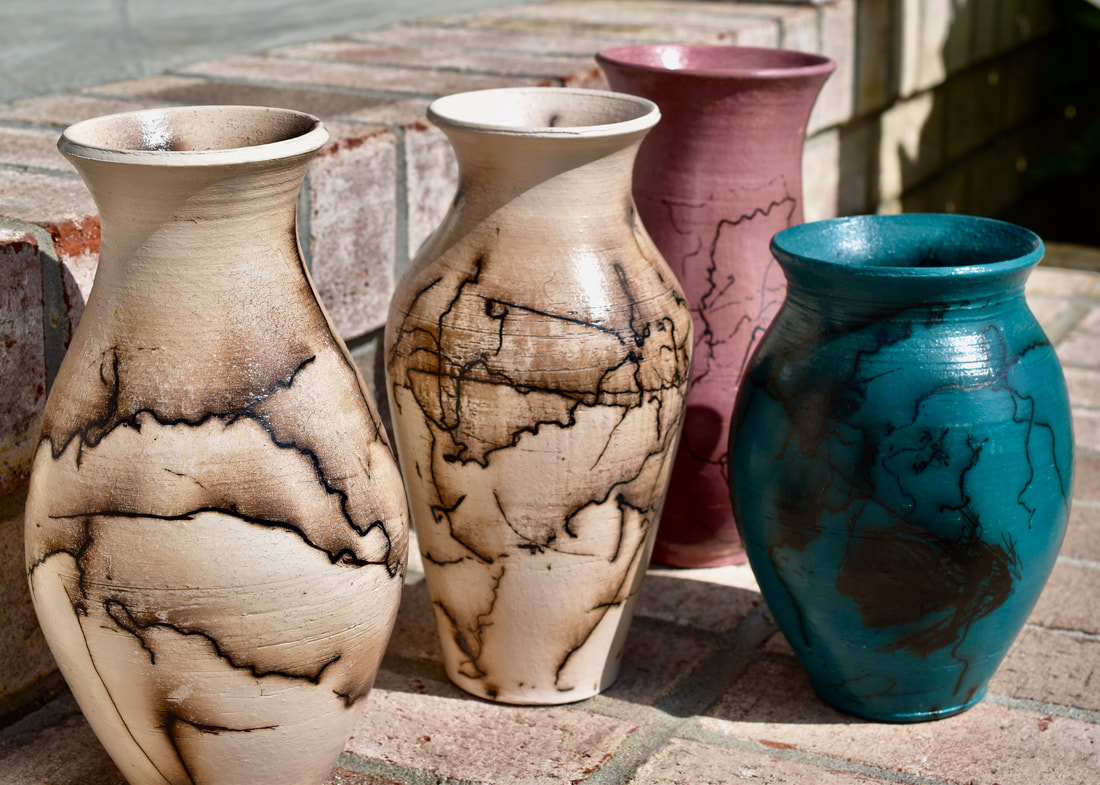
Horse Hair Pottery is removed from the kiln at around 1400 degrees Fahrenheit and the potter places strands of horse hair on the pot. The Horse hair burns beautiful patterns into the pottery.
Horse Hair and Raku Pottery is generally only used for decorative purposes.
The obvara firing process, which originated in Eastern Europe around the 12th Century, involves scalding the finish on the pottery to seal the porous surface. Similar to the raku pottery process, a bisqued pot is heated, in this case to 1650°F (899°C) and removed from the heat. The difference is that the pot is then dipped into a specific obvara yeast mixture before being dunked in water to rapidly cool the piece. The effects are quite stunning.
Horse Hair Pottery is removed from the kiln at around 1400 degrees Fahrenheit and the potter places strands of horse hair on the pot. The Horse hair burns beautiful patterns into the pottery.
Horse Hair and Raku Pottery is generally only used for decorative purposes.
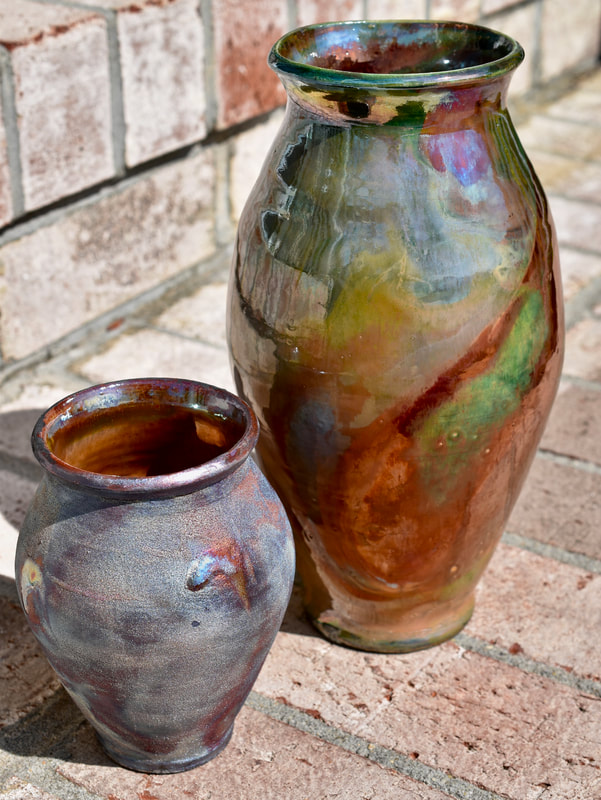
The obvara firing process, which originated in Eastern Europe around the 12th Century, involves scalding the finish on the pottery to seal the porous surface. Similar to the raku pottery process, a bisqued pot is heated, in this case to 1650°F (899°C) and removed from the heat. The difference is that the pot is then dipped into a specific obvara yeast mixture before being dunked in water to rapidly cool the piece. The effects are quite stunning.